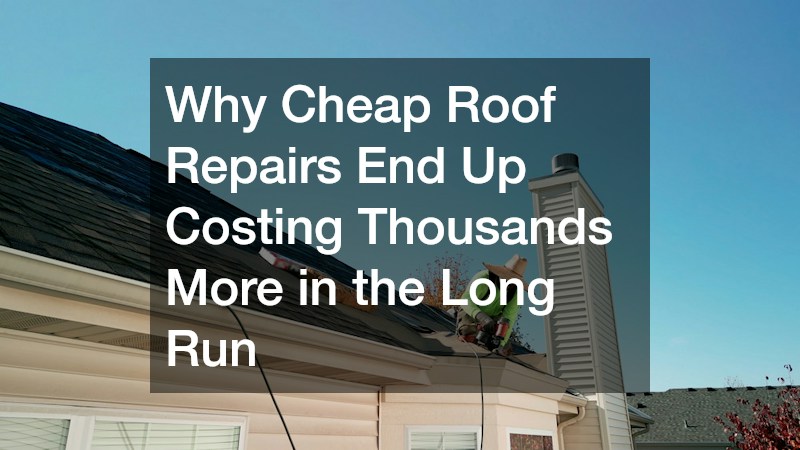

When water starts dripping through a ceiling light fixture or brown water spots bloom across a freshly painted living room wall, panic sets in quickly for most homeowners. A leaking roof is one of the most stressful household emergencies, threatening both your physical comfort and your financial security. In that moment of vulnerability, receiving a quote for a few hundred dollars to quickly slap some sealant over the problem feels like a massive relief. It is easy to convince yourself that a quick fix is all your roof needs to get through the season.
However, opting for a bargain-basement repair bid is almost always a costly financial mistake. Your roofing system is a complex, multi-layered shield engineered to protect your home’s structural framing, electrical systems, insulation, and interior finishes from severe weather. When a cut-rate service provider applies a superficial patch without addressing underlying moisture intrusion, they are not fixing the problem—they are simply hiding it.
Cheap roof repairs create a dangerous illusion of security. While the visible leak may temporarily stop, trapped moisture quietly rotted plywood decking, destroys attic insulation, breeds toxic indoor mold, and weakens structural rafters behind your drywall. What began as a simple flashing issue can easily escalate into a full-scale structural overhaul costing tens of thousands of dollars. This guide provides an in-depth look at why low-cost repairs fail, how deferred maintenance compounds damage, and how to invest wisely in permanent roofing solutions that safeguard your home’s long-term value.
The Anatomy of a Cheap Fix: Material and Workmanship Cut Corners
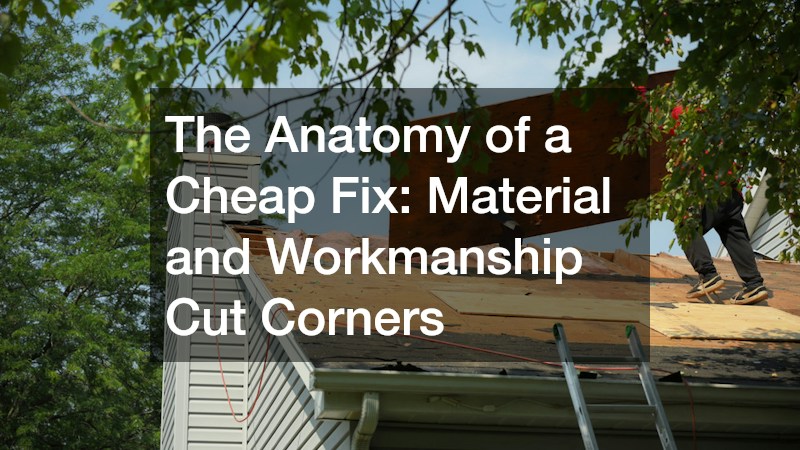
Understanding why low-cost roofing patches fail requires examining what actually happens when an underqualified provider takes on a repair job. Bargain estimates are not achieved through superior efficiency; they are achieved by cutting corners on materials, skipping critical safety steps, and rushing through execution.
Identifying Substandard Materials and Incompatible Sealants
High-quality roofing repairs require specialized materials engineered to expand, contract, and withstand continuous exposure to ultraviolet radiation, freezing temperatures, and heavy rains. Discount service providers routinely substitute these high-grade products with cheap, temporary alternatives that break down rapidly.
- Over-Reliance on Roofing Cement and Tar: Lower-grade providers frequently slather thick coats of plastic roof cement or black mastic tar over damaged shingles and flashing. While this creates a short-term seal, asphalt mastic dries out, bakes under intense solar heat, cracks within months, and leaves the roof vulnerable to renewed water penetration.
- Incompatible Metal Flashing: Improperly mixing metals—such as placing copper flashing directly against galvanized steel—triggers galvanic corrosion. This chemical reaction rapidly eats away at metal barriers, creating hidden pinhole leaks around chimneys and roof valleys.
- Mismatched Shingle Grades: Using low-grade, thin asphalt shingles or improper underlayment materials during a section patch creates structural weak points. Mismatched shingles fail to interlock properly, making them susceptible to wind uplift during the first severe storm.
Avoiding Improper Installation Techniques and Fastener Placement
Even premium materials will fail prematurely if installed without proper technical precision. Low-cost workers often lack formal trade training, leading to elementary installation errors that compromise the entire water-shedding system.
- Incorrect Fastener Depth and Placement: Driving roofing nails too deep cuts through the shingle fabric, allowing water to track along the shank into the wooden decking below. Conversely, high-nailing—placing nails above the designated nail line—prevents shingles from sealing down correctly, inviting wind tear-offs.
- Failure to Install Water Barriers: Skipping self-adhering ice and water shield membranes beneath valley shingles or around roof penetrations strips away the secondary defense against wind-driven rain and ice dams.
- Neglecting System Compatibility: Experienced roofers understand that a roof operates as an integrated system requiring balanced intake and exhaust ventilation, flexible flashing transitions, and proper underlayment overlap. Cut-rate operators treat a leak as an isolated hole, ignoring the broader mechanical dynamics of the structure.
- Subcontracting to Unqualified Labor: High-volume, low-cost operations frequently hire temporary, uninsured workers who lack basic safety certifications and trade knowledge. Hiring a dedicated roofer ensures that every aspect of the repair follows strict manufacturer application guidelines and local building codes.
The Hidden Costs: Compounding Structural Damage Behind the Scabs
The true danger of a cheap roof patch is not just that it fails—it is what happens beneath the surface while you believe your home is protected. Trapped moisture moves silently along joists and rafters, causing extensive structural decay long before water leaks through your ceiling again.
Uncovering Rotted Sheathing, Mold Spores, and Insulation Degradation
When a superficial patch stops water from dripping into living spaces, it often redirects the water laterally across the roof deck. Moisture becomes trapped between the top shingles and the underlying felt paper, creating an ideal environment for structural rot and biological growth.
- Plywood Decking Delamination: Continuous exposure to trapped moisture causes wooden roof sheathing to soften, warp, and delaminate. Rotted plywood loses its structural load-bearing capacity, leading to dangerous sagging sections that cannot support heavy snow loads or foot traffic.
- Saturated Attic Insulation: Water dripping onto fiberglass or cellulose insulation permanently ruins its thermal resistance (R-value). Saturated insulation compresses, loses its insulating properties, and causes heating and cooling bills to skyrocket as conditioned air escapes through the ceiling.
- Toxic Mold Proliferation: Dark, damp attic environments with compromised ventilation provide fertile ground for toxic black mold (Stachybotrys chartarum) to flourish. Spores travel through HVAC ductwork into bedrooms and living spaces, posing severe respiratory risks to family members.
- Structural Rafter Decay: Prolonged water exposure rots solid wood rafters, ceiling joists, and wall top plates. Repairing structural framing members requires extensive wall demolition, temporary shoring, and complex engineering, turning a minor maintenance issue into an overwhelming reconstruction project.
Managing Preventative Maintenance and Surface Debris Removal
Keeping a roof in top condition involves far more than just fixing visible leaks; it requires consistent maintenance to remove organic growth and debris that hold moisture against roofing granules.
- Removing Organic Moss and Lichen: Moss and algae retain moisture like sponges, driving roots under shingle edges and lifting them away from the deck. Professional exterior cleaning uses low-pressure soft-wash techniques and eco-friendly solutions to eliminate organic growth without stripping protective mineral granules off shingles.
- Clearing Eaves and Drainage Pathways: Clogged gutters cause water to back up beneath the roof edge, rotting fascia boards and soffits. Partnering with a reliable local roofing company for bi-annual gutter clearing and roof inspections ensures that rainwater sheds freely away from your home’s foundation.
- Inspecting Flashing Seals: Thermal expansion and contraction naturally loosen sealant around pipe boots, wall step flashing, and chimney saddles over time. Routine professional tune-ups catch deteriorating seals early before water can breach the interior envelope.
The Escalation: From Minor Patch to Premature Overhaul
Homeowners who consistently choose low-cost patches often find themselves caught in an expensive cycle of repeated failures. Over a five-to-ten-year period, paying for multiple quick fixes while ignoring underlying structural issues routinely costs far more than doing the job correctly from the start.
Calculating the True Financial Impact of Deferred Maintenance
Consider the cascading financial consequences of a cheap $300 patch. If the patch leaks internally for two years, the resulting damage typically includes replacing six sheets of rotted plywood ($600), remediating attic mold ($2,000), replacing ruined insulation ($1,200), and repairing water-damaged interior drywall and paint ($1,500).
Adding the cost of the eventual correct roof repair ($1,200), a single $300 bargain patch ultimately results in over $6,800 in total out-of-pocket expenses. Investing in a comprehensive, professional repair at the first sign of trouble eliminates these cascading secondary restoration costs.
Evaluating Long-Term System Overhauls and Total Upgrades
There comes a point in every roof’s lifecycle where patch repairs—no matter how well executed—are no longer financially sensible. Understanding when to stop patching and when to invest in a complete replacement is key to managing your home maintenance budget wisely.
- Widespread Granule Loss and Brittle Shingles: As asphalt shingles age, UV exposure bakes away their volatile oils, causing them to curl, cup, and shed protective granules. Attempting to nail new shingles onto brittle, aging materials breaks surrounding tiles, creating more leaks than you fix.
- Multiple Historical Leak Zones: If a roof has suffered water intrusion across several distinct slopes, the underlayment across the entire structure has likely reached the end of its useful lifespan.
- Planning a Full Structural Tear-Off: When a roof suffers widespread structural decking failure, working with full-service professionals to execute a complete roof replacement guarantees that all rotted sheathing is replaced, high-performance synthetic underlayment is laid down, and a brand-new, warranted roofing system is installed.
- Maximizing Property Value: A poorly patched roof with mismatched shingles severely depresses a home’s curb appeal and fails buyer home inspections. Installing a complete, certified roofing system with transferable manufacturer warranties adds significant value to your property and simplifies future real estate sales.
Vetting Professionals: Finding Quality and Long-Term Value

Protecting your home from the financial traps of cheap roof repairs requires partnering with qualified, reputable trade specialists who stand behind their craftsmanship. Vetting potential contractors thoroughly ensures that your investment yields durable, long-lasting protection.
Navigating Licensing, Insurance, and Manufacturer Certification
Never hire anyone to work on your roof without verifying their credentials first. Roofing is one of the most hazardous specialty trades, and uncertified operators expose homeowners to massive legal and financial liabilities.
- Active General Liability Insurance: Verify that the contractor carries at least $1,000,000 in commercial general liability insurance. This policy protects your home and property if a crew member accidentally causes structural damage or triggers a fire during installation.
- Comprehensive Workers’ Compensation: If an uninsured worker falls off your roof, you as the homeowner can be held legally liable for their medical expenses and lost wages. Always insist on receiving a certificate of insurance (COI) sent directly from the contractor’s insurance carrier showing active workers’ compensation coverage.
- Manufacturer Factory Certifications: Top-tier manufacturers like GAF, CertainTeed, and Owens Corning offer specialized factory certification programs for elite contractors. Hiring certified roofing contractors grants you access to extended system-matched warranties that cover both materials and labor for decades.
- Local Municipal Licensing and Permits: Ensure the company holds valid state and local contractor licenses and commits to pulling all required building permits. Municipal inspections provide an independent double-check on workmanship standards.
Selecting Established Local Specialists and Technical Master Installers
Distinguish between established regional businesses with deep community roots and out-of-state “storm chasers” who sweep through neighborhoods after major hail or wind events, perform low-quality work, and disappear before their warranties can be tested.
- Deep Community Reputation: Established local roofers rely on regional word-of-mouth and long-standing supplier relationships. They understand specific local climate threats, such as heavy snow accumulation, coastal wind loads, or high summer humidity, and tailor their installation techniques accordingly.
- Advanced Diagnostic Equipment: Quality-focused roofing experts use infrared thermal imaging cameras and digital moisture meters to scan roof decks. These non-destructive diagnostic tools pinpoint exact moisture migration paths beneath the shingles, ensuring all hidden water damage is identified and repaired.
- Comprehensive Written Estimates: Never accept a vague, verbal quote written on the back of a business card. Professional bids should clearly detail the scope of work, brand and line of materials to be installed, cleanup protocols, permit fees, and explicit warranty terms.
- Dedicated Certified Technicians: High-caliber contractors employ an experienced roof installer who specializes exclusively in precision detail work, such as soldering custom metal flashing, installing skylight kits, and sealing intricate roof valleys.
Cost & Value Comparison: Cheap Patch vs. Quality Repair
To see the stark difference between short-term savings and long-term value, review this financial and performance breakdown comparing a cut-rate quick fix against a certified professional repair.
10-Year Financial Impact Matrix
- Initial Upfront Expense:
- Cheap Quick-Fix Patch: Low ($200 – $400 upfront).
- Certified Professional Repair: Moderate ($600 – $1,200 upfront).
- Workmanship Warranty Protection:
- Cheap Quick-Fix Patch: None, or a 30-day verbal agreement that is difficult to enforce.
- Certified Professional Repair: 1 to 5-year written contractor warranty backed by manufacturer guarantees.
- Expected Lifespan of Repair:
- Cheap Quick-Fix Patch: 6 to 18 months before failure or new leaks emerge nearby.
- Certified Professional Repair: 10 to 15+ years, matching the remaining lifespan of the surrounding roof.
- Risk of Hidden Structural Decking Rot:
- Cheap Quick-Fix Patch: Extremely high; water remains trapped beneath superficial sealant.
- Certified Professional Repair: Zero; all damaged shingles and rotted plywood sheathing are removed and replaced.
Your roof is the single most critical protective barrier safeguarding your family, your personal belongings, and your real estate equity. While taking advantage of a low-ball repair estimate is tempting when unexpected leaks occur, cut-rate roof patches almost always lead to compounding structural damage, health hazards, and severe financial regret.
Cheap repairs address only the visible symptoms of a leak while allowing trapped moisture to rot plywood decking, destroy insulation, and cultivate toxic mold behind your walls. By investing in licensed, certified trade specialists who perform thorough diagnostic evaluations, utilize premium compatible materials, and execute repairs to strict building codes, you eliminate the risk of recurring leaks and protect your home’s value.
When it comes to maintaining the structural integrity of your property, quality workmanship is not an expense—it is an investment that pays continuous dividends in safety, performance, and total peace of mind.